White Paper · Marketplace of authored robots · MILA token on TON
A cooperative marketplace of authored robots.
MILAGPT is the first cooperative marketplace of authored robots in AI. Experts and creators build their own robots on our engine, earn 50/50, and receive payouts straight into the MILA wallet (Gram / HUMO) — a Telegram-native payout rail that Character.AI and Poe don't have. In parallel, the cooperative directs its fund into socially-useful public spaces — yoga and learning centers, co-workings, co-livings, sports and wellness centers for the community. This document is informational.

01 · Abstract
The first cooperative marketplace of authored robots.
MILAGPT is a two-sided marketplace of authored AI robots that live in Telegram. On one side are experts and creators: they create their own authored — designer, expert — robots using our tools (their own knowledge, skills, brand), publish them to the catalog after moderation, and earn 50/50 when others rent it. On the other side are users who pay for value: knowledge, brand, results. Technically, a new robot is not new code but a new configuration of a single engine; economically, it's a creator economy, not "chatbot rental."
The main moat is human, not code. A competitor will copy the engine within a month, but won't copy the community of creators with their audiences who already earn on the platform. The founders' (Shakhruz + Farangiz) unfair advantage is the ability to build community, inspire and develop people and deep expertise in self-development, education, expert and professional niches, marketing, and business. That lets us moderate the catalog, select and grow creators, and set the platform's tone. The second advantage is the payout rail: the MILA wallet with settlement in Gram and the Uzbek stablecoin HUMO right inside Telegram — meaning we pay creators where global platforms (Character.AI, Poe) stumble over banks and KYC.
In parallel, the cooperative directs its fund into a second, physical pillar — socially-useful public spaces: yoga and learning centers, co-workings, co-livings, sports, wellness and educational centers for the community (SkylineYoga). A real asset and a stable business that no AI will replace. The digital marketplace provides growth, the physical spaces provide resilience; the MILA token and partners fund both pillars.
Legally and culturally, MILAGPT is built as a cooperative, not a classic venture-backed startup. Development is funded by the community itself through the MILA community token on the TON blockchain. The token is a digital membership card: participation in the cooperative, the right to vote, early access to the factory's bots and services, and recognition of contribution. Behind the token stands a working agent factory — real value that the cooperative creates and develops, and in whose growth holders take part.
This White Paper is informational. The team expects to create economic value for holders as the project develops; this depends on how the work progresses and is not a guarantee. The economic model is being worked out, and the details will be disclosed in the legal section. Token issuance, key custody, and management of funds are carried out personally by the founder after passing compliance. Details are in the "Risks and legal disclaimer" section.
02 · Vision and mission
"The robots do the work — the human is happy."
We measure technology not by its power, but by how much human time it returns to people. Routine to the machines, intent and care to the human. This is the mission of MILAGPT and the title of the founder's book.
Routine to the machines
Emails, reports, newsletters, negotiations, analytics. Everything that eats hours and requires no soul is done by agents — precisely and around the clock.
Intent to the human
Decisions, taste, creativity, loved ones. What can't be automated is exactly what we free up time for.
Creators at the center
An expert, blogger, coach, or teacher builds their own robot and earns 50/50 on it. The marketplace belongs to the community of creators, not a corporation — and that community is our main moat.
03 · The problem and the moment
The window opened right now — three breakthroughs converged.
Value in today's market is attention: being present in search engines and in AI answers at the same time. Attention is shifting to agents. And launching your own agent has, for the first time, become genuinely accessible and easy.
A bot without engineering
Telegram Bot API 9.6 "Managed Bots" (April 2026): your own real bot in a couple of taps, the server starts, the token goes in. Before, this was impossible.
High-quality, affordable AI
Open-source models have appeared that reason well enough and are rapidly catching up to the top closed ones — at a cost tens of times lower. Strong intelligence has stopped being a privilege: you can already build a mass-market product on it.
The agent lives in the chat
AI should live in the messenger, in the shared chats where people work — not in a separate app. Telegram is already the perfect interface. In Uzbekistan, the entire audience lives in it.
04 · Ecosystem
Every vertical is a context aggregator and a marketplace of authored robots within the niche.
The essence of MILAGPT's strategy: use AI for comprehensive, continuous and systematic data collection about a market and its players → aggregate vertical context → publish it through live dashboards and blogs → collect and direct traffic from search engines and from GEO at the same time (generative engine optimization — presence inside AI answers: ChatGPT, Gemini, Perplexity). The collected attention feeds the vertical's robots, and the robots return data to the aggregator — the flywheel spins up.
The aggregator feeds the factory, the factory feeds the aggregator
Public aggregator maps are live dashboards growing in page count → a mass of content → rankings in Google and in AI answers. The same clean data becomes an API source for the vertical's robots, and the robots return new players and context to the database. This is a defensive moat on attention.
Co-branded factories together with a partner
The partner brings brand, niche expertise, and launch funding; the cooperative provides the engine, the aggregator, and runs the service. Each new vertical is a new revenue stream. That's why, for most verticals, we openly seek partners, not just investors.
7 verticals — robot factories
Seven market verticals on a single engine. The partner status is shown honestly: in some, a partner is already engaged; in others, we're actively seeking one.
The strongest vertical so far (a detailed breakdown and roadmap are below). It connects the entire tourism market of Uzbekistan: air, rail, tours, hotels, guesthouses, transfers and carriers, guides. The aggregator tourmap.uz (in development) + an AI travel guide + an exchange between agents. The partner is TeamAvia / Safi (IATA booking infrastructure).
A factory of business bots on top of OctoFunnel: marketing, project management, mentorship, and entrepreneur education. The parent bot @OctoClawFather_bot already works. A family of domains: octoclaw.uz, tadbirkorbot.uz, hamkorbot.uz. We're seeking a partner for the vertical.
"Create your own nanobot friend" — AI friends and entertainment bots for Uzbekistan's youth against loneliness; a tutor-friend for English, Russian, and Uzbek, with a safe tone. The parent bot @NanobotFather_bot and the site already work. We're seeking a partner for the vertical.
AI teachers, tutors, and examiners: bots for learning and for the teachers themselves. On top of the aggregator schoolmap.uz (schools and learning centers). We're seeking partners for the vertical.
5 · Tradespeople
ustabot.uzseeking partnerTradespeople, craftsmen, repairers, and builders: an assistant bot for the contractor and for the client. An Uzbek family of "-bot.uz" brands — an assistant for every role in the crafts-and-construction market.
Home and small-scale farmers: growing food and flowers in home/garden conditions, an agro-advisor. In partner talks (including the Planta Greenhouses direction).
Trading bots and financial analysts: a friendly AI analyst explains charts and trends. This is education and analytics, not an investment recommendation and not automated trading. We're seeking a partner for the vertical.
Aggregator maps — vertical traffic collectors
The aggregator flywheel is simple: collect market context → publish it as a live map-dashboard + blog → collect and direct traffic in search and in GEO → traffic and data feed the factory's robots. Each map is a separate domain and a separate attention collector that only grows more valuable over time.
On top of the maps, specialized bots also stand: wellnessbot.uz — a single bot for clients of the wellness vertical, dentalbot.uz — a bot for professional dentists, ustozbot.uz — bots for learning and for teachers. The very same pipeline — "collect data → dedupe → moderate → publish → route into the chat" — ships aggregator after aggregator.
The tourism vertical — flagship of the ecosystem
Tourism is the strongest vertical of MILAGPT so far, because in it all layers of the market and a partner's real infrastructure converge at once. Through one AI guide and one exchange between agents, we connect Uzbekistan's entire tourism market: flights, rail, tours, hotels, guesthouses, transfers and carriers, guides. The aggregator tourmap.uz (in development) will collect the context of destinations, properties, and offers, collect and direct the traveler's traffic in search and in AI answers — and feed it to the vertical's robots. The scheme is already proven on the live yogamap.uz.
AI guide for the traveler (B2C)
A concierge in Telegram assembles an itinerary on request: "5 days Samarkand + Bukhara, budget, a Russian-speaking guide" — and selects hotels, transfers, tours, and tickets from the tourmap.uz database.
Supplier robots (B2B)
A hotel, carrier, travel agent, or guide gets their own robot: it keeps current capacity, prices, and availability and answers requests itself — without manual correspondence.
Exchange between agents
Demand robots and supply robots meet in shared pools of requests and offers: a traveler's request automatically matches hotel capacity, transfers, and guides. A marketplace between the robots themselves.
Roadmap of the tourism vertical
Comprehensive, continuous and systematic context collection: destinations, properties, tours, hotels, carriers, guides. Publishing as a live map-dashboard + blog, collecting and directing traffic in SEO and GEO. Extracting a reusable "aggregator engine."
A concierge bot in Telegram assembles itineraries on request from tourmap.uz data: hotels, transfers, tours, tickets. Uzbek/Russian/English voice and text. First monetization — leads and service for the traveler.
Hotels, guesthouses, carriers, travel agents, and guides get their own robots: capacity, prices, availability, automatic answers to requests. The vertical fills with supply from the market side through the TeamAvia / Safi partner network.
Pools of requests (demand) and offers are matched automatically between robots: a traveler's request is matched to hotel capacity, transfers, and guides. An exchange between the robots themselves within the tourism vertical.
Expert guides and agencies publish their own specialist robots (by region, language, theme) to the vertical's catalog. Billing and pricing tiers run on the factory engine. The tourism vertical becomes a full-fledged marketplace of robo-guides.
04a · Mila City
Mila City — a unified knowledge graph of the city beneath every vertical.
Beneath the robot factory lies a foundation — a living knowledge graph of the city: a structured, continuously updated map of everything in a city across every vertical — organizations, prices, services, reviews, events. It is the context layer that makes each vertical robot smart and each aggregator valuable. Breadth first (the graph and scale); monetization is layered on later.
Breadth — the whole city, one system
Each vertical is one config (YAML) over a shared core: adding a new city sphere = adding one file.
Data is not duplicated (dedup by source/sourceId), and every organization has a canonical
id. This is not a single niche — it is a map of the entire city economy in one database.
Robots collect and systematize the city's knowledge
Analyst robots collect, analyze and systematize the city's knowledge; content-maker robots run news channels and keep catalogs, maps and directories fresh. This accrues organic attention and traffic, which feeds the vertical robots and converts into clients and leads.
04b · Marketplace of authored robots
The heart of the project — an App Store / Netflix for AI robots.
This is exactly what MILAGPT is — a two-sided marketplace: experts and creators build premium robots on our engine, users pay for value (knowledge, brand, results), and the creator receives 50% of revenue into their wallet. This is a different class of business than chatbot rental — it's a creator economy. A robot's price no longer hinges on token cost — it's tied to the expert's value. The same config-driven character catalog already running in the engine extends to authored personas.
Moat №1 · Community and creators (the human moat)
More creators → a richer catalog → more users → more revenue → more creators. A nonlinear flywheel. A competitor will copy the code within a month, but won't copy the community of creators with their audiences who already earn with us. The founders' unfair advantage is the ability to build community, inspire and develop people and deep expertise in self-development, education, expert niches, marketing, and business. That lets us select, grow, and moderate creators — which can't be cloned.
Moat №2 · The creator payout rail
Paying creators in emerging markets (banks, KYC, cross-border) is the main bottleneck for global platforms (Character.AI, Poe). For us it's already solved: the MILA token + a Telegram-based crypto wallet + payouts in Gram and HUMO (the Uzbek stablecoin). Programmable micro-royalties — straight into the creator's wallet.
The product backbone — from a free friend to an authored robot
Entry is free and native. Any user gets a base nanobot — a universal friend. Want more — they upgrade it to the "Author" tier (its own micro-VM, expanded skills, authoring tools), build a specialist robot, publish it after moderation, and rent it to others — keeping 50%.
Revenue share — a simple 50/50
The creator receives 50% of gross revenue from their robot, the platform — 50% (covering tokens and infrastructure). A price floor: the authored robot's price ≥ cost, so our half stays in the black. Simple, fair, and clear to both sides. For comparison: the App Store and Spotify give creators 70%, YouTube — 55%; 50/50 is generous for a start and at the same time protects the cooperative's economics.
Three revenue loops — three ways in
1 · Robot rental
The cooperative's standard personas (Free / Lite / Pro / Power). Price — cost plus markup. The "try it yourself" way in.
2 · Authored robot (royalties)
An expert's premium persona with a 50/50 revenue share. Price — from the creator's value and brand. The way in: "become an author and earn."
3 · Vertical (cooperative)
Co-ownership of an entire vertical for a partner. Price — a deal package. The way in: "co-own a vertical." One creator can also be a partner.
Launch — step by step
Bring the creator marketplace into the vision and the whitepaper. Costs $0, sharply strengthens the angel story: a marketplace, network effects, a creator economy instead of "bot rental."
Add author_id and rev_share to the persona metadata and the ledger right now. Don't build the storefront and payouts — just lay the model so we don't have to rewrite later. The catalog is already config-driven.
3–5 hand-picked creators: yoga (Farangiz), an IELTS coach, a psychologist. We build the robot together with them, they promote it to their audience, the split is manual. It proves the model and yields flagship cases without self-serve infrastructure.
After demand is proven: no-code authoring tools, earnings dashboards, a searchable storefront. We already have the payout rail + stablecoin — which speeds up opening the marketplace.
We're opening enrollment for founding authors. These are experts, bloggers, coaches, teachers, and creators who join the platform now, at the start — and build the first catalog of authored robots together with us.
We select the first authors by hand — like Netflix Originals. This is not "buying a share": a founding author joins the cooperative on early terms, and the format of participation and support is discussed individually. What a founding author receives:
- Founding-author status — recognition of contribution and a place in the catalog's first showcase;
- 50/50 royalties from their robot, payouts into the MILA wallet (Gram / HUMO);
- the team's help in building and packaging your first robot around your expertise;
- a role in shaping the catalog and the platform's tone, early access to authoring tools;
- recognition of contribution in MILA tokens and membership in the cooperative.
First-wave seats are limited — we select authors by hand, like Netflix Originals. Write to the founder: [email protected] or Telegram @shakhruz_ashirov.
05 · Two investment pillars
Digital — for growth. Physical — for resilience.
MILAGPT deliberately rests not on one but on two pillars. One pulls into the future and grows fast, the other stands on the ground and brings stable income. The cooperative's capital (the MILA token + partners) is distributed across both — that's diversification, not an all-in bet on a single trend.
Pillar 1 · Digital factories
Robots, software, and compute (our own data centers as we grow) to produce and sell AI generations: Mila City, the "Cute Robots" factories, aggregator verticals. High growth potential — but also the high volatility of the AI market.
Pillar 2 · Socially-useful public spaces
SkylineYoga yoga centers, learning centers, co-workings, co-livings, sports and wellness spaces for the community. A real physical asset and a stable business, which no AI will replace. An attractive, welcoming space where the local community grows in person.
SkylineYoga — a franchise of socially-useful public spaces
MILAGPT opens yoga centers in major cities, in the best locations, and offers the partner turnkey center management. This is not just a yoga studio but an attractive space for the local community's self-development — and a stable, profitable business built on living human contact.
The best locations
The cooperative directs its fund into creating socially-useful public spaces in major cities — yoga and learning centers, co-workings, co-livings, sports and wellness places you want to return to. The quality of the space is part of the product.
Turnkey management
MILAGPT takes on the launch and operational management of the center: concept, brand, hiring, scheduling, marketing, community. The partner doesn't need to build operations from scratch.
Co-investment
MILAGPT as a company acquires the real estate itself and manages it together with partners — fractional co-ownership of a real asset, without yield guarantees.
Management terms for the partner
10% of the launch budget
For organizing and launching the center "turnkey," MILAGPT receives 10% of the launch budget (a one-time fee for deployment).
10% of monthly turnover
For the center's operational management, MILAGPT receives 10% of monthly turnover — a fee for running the system, not a guaranteed income for the partner.
06 · Product and traction
This is not an idea on a napkin. The engine is already spinning.
The marketplace engine works
@NanobotFather_bot assembles an instance end to end: name → avatar → its own key → clone → launch, on Bot API 9.6. It's the same config-driven engine on which authored robots are stood up.
The first factory is launching
nanobot.uz — the first MILAGPT factory, in the process of launch and commissioning. The @NanobotFather_bot bot is live, in 3 languages.
Voice in Uzbek
An MCP stack: uzbekvoice (voice/STT/TTS), octofunnel, youtube, resend. A demo with an Uzbek voice works from a phone.
Travel concierge (SafiAI)
@safi_travel_bot — the SafiAI AI concierge, in commissioning. The partner TeamAvia with real IATA infrastructure.
AmirAI in work with CPR
Media analytics for the Tashkent Khokimiyat on a separate machine at the CPR (Center for Progressive Reforms) office.
07 · The MILA token
MILA — a membership community token on TON.
MILA is the cooperative's digital membership card: participation, the right to vote, early access, and services. Behind the token stand both pillars of the cooperative — a working agent factory and the physical socially-useful public spaces of SkylineYoga. Holders share the value the cooperative creates and take part in its development.
Token parameters
| Parameter | Value | Status |
|---|---|---|
| Name | MILAGPT Cooperative Token | fact |
| Ticker | MILA reserved: MILAG / MGPT | fact |
| Blockchain / standard | TON · Jetton TEP-74 | fact |
| Decimals | 9 (TON standard) | fact |
| Jetton deploy | via minter.ton.org (open-source deployer by the TON Foundation) | fact |
| Supply | 10,000,000 MILA | pending approval |
| Starting price | 1 MILA = 1 TON (Toncoin) — for the first period: 36 months of vesting and launch; afterwards the cooperative decides whether to float the rate. | draft |
| Vesting | 36 months (off-chain at the start) | proposed |
What holding gives you (utility) — both pillars
The token's main purpose is to fund the building of both of the cooperative's pillars and to give the contributor a share/stake in what's built. Operations (running the system, including the yoga-center management service of 10% launch + 10% turnover) are paid for separately, in money — this is not covered by the token.
Funding the build + a share (CapEx)
A MILA token package funds the creation of a digital vertical/city (adapters, data collection, brand, graph) and the acquisition/launch of real estate (a yoga center) → the contributor receives a share/stake in the segment or asset. This is cooperative crowdfunding framed as participation, not "payment for SaaS."
Operations — in money, separately
Hosting, data freshness, running the bots, leads, GEO — and in the physical pillar the center management service (10% of the launch budget + 10% of monthly turnover) — this is recurring operations. Paid in fiat/TON, not in the token.
Distribution / allocation
The recommended breakdown of the fixed supply of 10,000,000 MILA (value shown at the 1 MILA = 1 TON peg; the exact percentages are pending the founder's approval). Crowdfunding and sales to partners of both pillars come out of the "sale" allocation.
| Purpose | MILA | % | ≈ TON (1 MILA = 1 TON) | Vesting / status |
|---|---|---|---|---|
| Contributors (registry, 27 people) | 90,272 | 0.903% | 90,272 TON | 12 mo off-chain · fact |
| Crowdfunding / sale to partners (cap) | 4,000,000 | 40% | 4.0M TON | in waves, not all at once · proposed |
| Rewards (contribution / promo / early users) | 1,500,000 | 15% | 1.5M TON | per actual contribution · proposed |
| Team / founders | 1,200,000 | 12% | 1.2M TON | 12-mo cliff + linear · proposed |
| Treasury / reserve (multisig 3/5) | 3,209,728 | 32.097% | 3.21M TON | by council decision · proposed |
| Total | 10,000,000 | 100% | 10M TON | fixed supply |
Exchange mechanics
Phase 1 — a pool on STON.fi
A standard Jetton + a MILA/Gram pool on STON.fi using the constant-product formula (x·y=k): buys move the price up, sells — down. This is an industry-proven automated market maker (AMM); its code has already been audited; the token is visible in all wallets and blockchain explorers. Minimum custom code, maximum trust.
Phase 2 — our own bonding curve
A custom exchange contract with a bonding curve (in TON's smart-contract language — Tact) — only after a testnet and an independent audit. This gives "our own price" and governance rules wired directly into the blockchain, but requires serious security review. after audit
08 · Cooperative and governance
The council of holders decides where Gram goes.
Governance is the pairing of "the participants' voice + a treasury on the blockchain behind signatures." At the start — without an over-complicated DAO (an autonomous organization on smart contracts), but fully transparent.
The three meanings of the MILA cooperative
A share, a vote, and value to use
A participant receives a share, the right to vote, and — most importantly — access to the value the robots generate: not only in money, but also in kind — subsidized public goods of the cooperative. Active participants get a priority right to use them.
Openness
Anyone can join — through deed, resources, or finances. Buying MILA tokens grants the right to take part in using the value the robots create. No closed clubs.
Protection from financial takeover
A lesson from DAO and blockchain projects: large capital pulls value into its own hands against the interests of the project and the community. The cooperative form and the weight of contribution in deed (not capital alone) protect the project from takeover.
Governance mechanics
Treasury = a multisig on TON
All the collected Gram sits in a multisig contract. The signers — for example 3 of 5 (the founder + key holders + reserve). Any expenditure = an order signed by a quorum. composition pending approval
Voting weighted by MILA
Voting (ton.vote or the cooperative's bot): vote weight = MILA balance in the wallet. Holders vote by signature, with no gas to vote.
Execution
The result of a vote is executed by the multisig signers. All decisions and treasury transactions are published with links to tonviewer.
What goes to a vote
09 · Crowdfunding and use of funds
Funds go to development — by community decision.
Funds finance the development of the cooperative and its factory. Buying MILA is support for MILAGPT and access to its utility. The collected Gram is kept in the multisig treasury and spent by the council of holders on the factory's development.
Infrastructure (pillar 1)
Moving to the cloud, scaling the engine, compute.
Real estate (pillar 2)
Acquiring and launching SkylineYoga centers in the best locations (co-investment with partners).
Intelligence
Paying for AI models, welcome balances for the first users.
Security and compliance
Protecting the system, Uzbekistan payment channels, a legal minimum.
Participant registry (aggregates)
Already collected in the registry
The participant registry has accumulated ~$90,272 from 27 participants (the original cooperative fundraising). Gratitude to participants — in MILA tokens, proportional to contribution, without vesting.
Personal data is not published — only aggregates. real PII — aggregates only
The nature of the collection
This is the formation of the cooperative and the funding of its development by the community. The old token contract is not being restored; a new Jetton is issued on TON. The economic model — how the factory shares the value it creates with holders — is being worked out; the details will be disclosed in the legal section.
We're looking not only for investors — we're looking for partners
MILAGPT is open not only to sponsors and cooperative participants, but also to partners who build verticals together with us. A vertical partner brings brand, niche expertise, market access, and launch funding — and co-owns their vertical (aggregator + robot factory + a future marketplace of robots within the niche). The cooperative provides the engine, the aggregator infrastructure, the Uzbek voice, and operational support.
Vertical partner
Co-builds one of the 7 verticals: brand + expertise + market + launch funding. For many verticals a partner has not yet been found — it's an open position.
Cooperative participant
Supports development through the MILA token, receives utility, a vote, and a part in the cooperative's development.
Real estate co-investor
Co-owns the physical pillar — a SkylineYoga center in the best location (fractional participation in a real asset, without a guarantee of return). MILAGPT acquires and manages the real estate together with the partner.
Founding author
An expert, blogger, coach, or teacher builds their own robot and earns 50/50. At the start — founding-author status, royalties, a place in the first catalog (by invitation). Can be combined with the role of vertical partner.
A partner's participation is the joint building of value within a vertical. The specific model for distributing a vertical's results is being worked out and will be disclosed in the legal section.
10 · Roadmap
Testnet → mainnet pool → bonding curve after audit.
The project wallet, the multisig treasury (first on testnet), the registry of TON addresses of the 27 participants (address + amount only, no PII). A legal crypto consultation before any mainnet collection.
Deploy the MILA Jetton on testnet via minter.ton.org, a test distribution to founders, a governance vote run-through. The tokens aren't real — it's a rehearsal without risk.
Deploy the multisig treasury and the MILA Jetton (supply 10M), distribute ≈90,272 MILA per the registry (27 participants), transfer minter admin rights to the multisig, launch the MILA/Gram pool on STON.fi, a storefront and an announcement with a disclaimer. All on-chain actions are irreversible and are performed by the founder with their own keys.
If needed — a custom exchange with a bonding curve after an independent audit. In parallel: factory growth, new co-branded verticals, the marketplace of characters, and the exchange between agents.
11 · Team and partners
Who's building it.
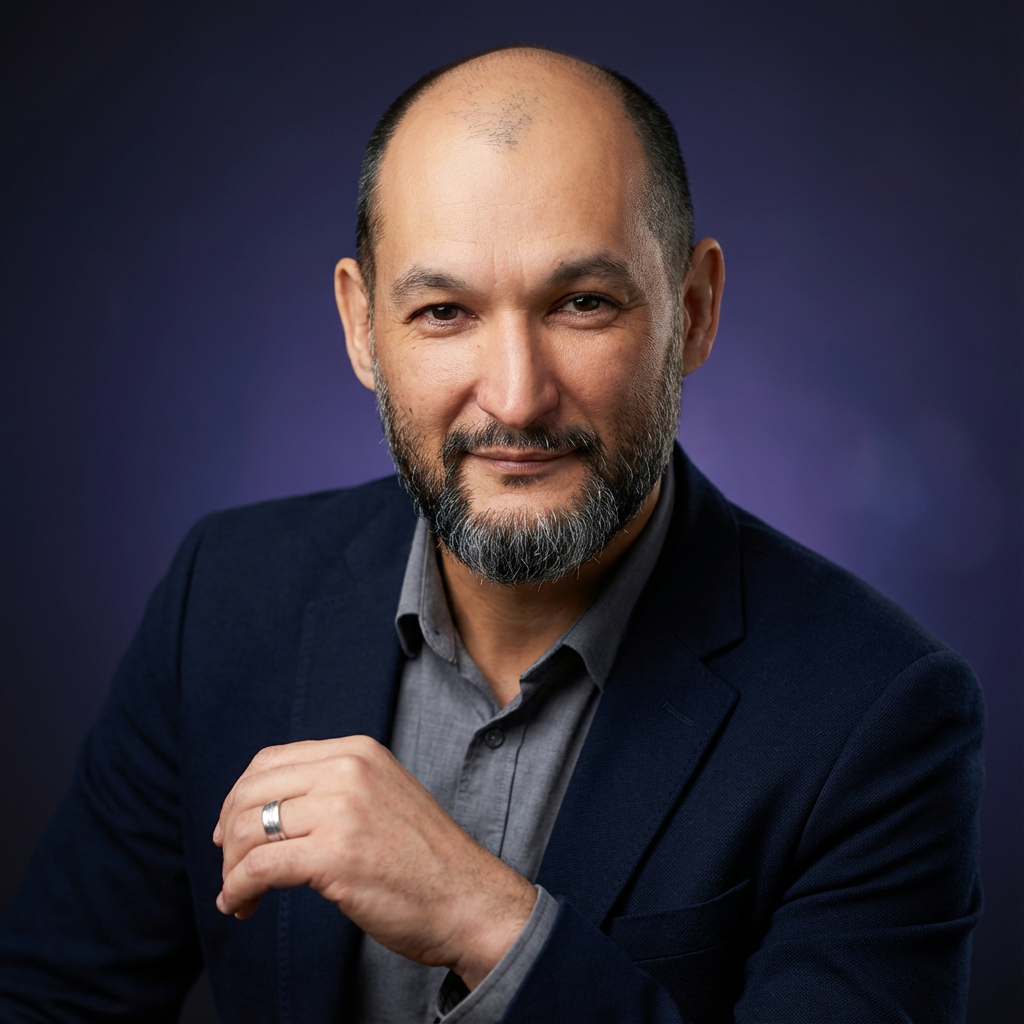
Shakhruz Ashirov ("Ashot")
40 years in programming, a programming-olympiad champion, author of the book "The Robots Do the Work, the Human Is Happy."
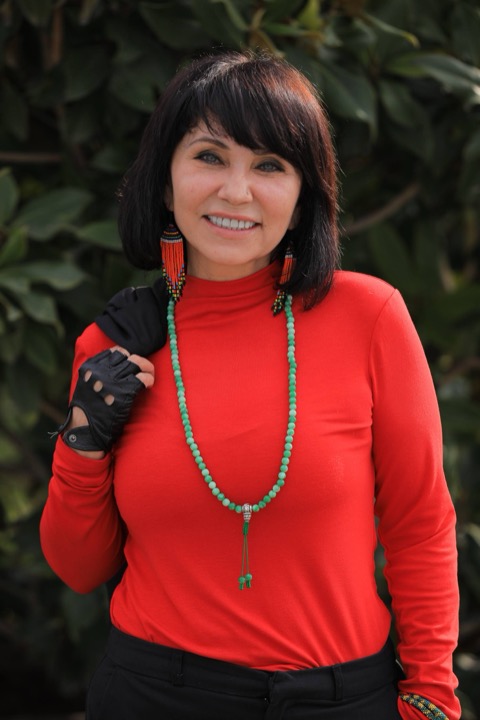
Farangiz Sharapova
Author of the Skyline Yoga method and art-meditation. Teacher, medical professional, dermatologist-cosmetologist. Artist and traveler, organizer of ceremonies, retreats, and transformational practices. Co-author of the educational transformational game "New Energy."
Operations and development are run by a small team together with AI agents on the MILAGPT platform.
12 · Risks and legal disclaimer
Required reading before any participation.
⚖️ The nature of the token
MILA is a membership community/utility/governance token of the MILAGPT cooperative on the TON blockchain. It confirms participation in the community, grants the right to vote, and gives access to utility (early versions and bot services). The team expects to create economic value for holders as the project develops; however, this depends on how the work progresses and is not a guarantee of income or appreciation. MILA is not a security, a share, a stock, a deposit, or an investment contract. MILA is not backed by any reserve or other asset; the 1 MILA = 1 TON peg for the first period is merely a stability-benchmark narrative, not a reserve and not a price guarantee (the dollar value floats with the TON rate). The token supply (recommended 10,000,000 MILA) and the starting price (draft: 1 MILA = 1 TON) are subject to the founder's final approval. The economic model — how both pillars of the cooperative share the value they create with holders — is being worked out, and its details will be disclosed in the legal section. This document is informational and is not an offer or investment advice.
🔍 Transparency and the cooperative's design
The cooperative is built on openness: emission is controlled by a multisig and is public on-chain, the treasury and all transactions are visible on the blockchain, funds are spent on development by decision of the council of holders. The value of the token rests on a working agent factory and its utility. Participation is voluntary, and a holder at any moment freely disposes of their token.
🏠 Real estate co-investment (SkylineYoga)
Participation in the physical pillar (SkylineYoga centers) is structured as fractional co-ownership of a real asset together with MILAGPT — without a guarantee of return on investment, yield, dividend, or fixed profit. MILAGPT's fee of "10% of the launch budget + 10% of monthly turnover" is a fee for the center management service, not a promise of profit to the partner. The specific shares, rights, and distribution of results for each center are set out in a separate contract. This model requires review by an investment/real-estate lawyer in Uzbekistan before any fundraising.
📉 Market and technical risks
- the price is set by the automated market maker and may fall all the way to zero;
- low liquidity = high volatility and slippage;
- on-chain transactions, minting, transfer of rights, and transfers are irreversible — an error means loss of funds;
- scam copies of "MILA" are possible — verify the official contract address;
- the custom exchange (Phase 2) goes to mainnet only after an independent audit.
🏛 Regulatory status and control
- cryptocurrency regulation in Uzbekistan (NAPP) and other jurisdictions is a separate area; the token's status may depend on the participant's jurisdiction;
- legal review is conducted before any public fundraising beyond symbolic amounts; tokenomics and the sale require review by a crypto/investment lawyer in Uzbekistan (NAPP), and real estate co-investment by an investment/real-estate lawyer, before publication and fundraising;
- token issuance, key custody, and management of funds are carried out personally by the founder under compliance; this document is informational;
- participate only with funds whose loss you can afford.
"MILA is a membership community token of the MILAGPT cooperative on the TON blockchain. It
confirms participation in the community, grants the right to vote, and gives access to utility. The team expects to create
economic value for holders as the project develops; this depends on how the work progresses and is not a
guarantee. MILA is not a security, a share, a stock, or a deposit. The economic model is being worked out
and will be disclosed in the legal section. The price is set by the automated market maker and may change. The collected
funds are spent by decision of the council of holders. Blockchain transactions are irreversible. Participate thoughtfully."
— the final wording
to be agreed with a lawyer.
13 · How to take part
Become a founding author.
Three ways into the project. Become an author — build your own robot and earn 50/50 (you can join as a founding author — by invitation). Rent a robot from the catalog. Co-own a vertical as a partner (aggregator + a marketplace of robots within the niche) or the physical pillar — the SkylineYoga centers. Open to talking about the whole cooperative: the marketplace, the MILA token, and a role on the council of holders. Get in touch directly with the founder.