


Eight in the morning. You open your phone and there are forty unread messages. A client asked about prices last night. A supplier sent a file. An employee wrote "remind me". Somewhere in there is a promise you made on Friday and have already forgotten.
By the time you've gone through it all, an hour has passed. And you haven't touched the main task of the day.
It isn't laziness or a bad memory. When everything goes through one person, there's no single place where they can see it all at once. So every morning they piece the picture together again, chat by chat.
What a morning summary is
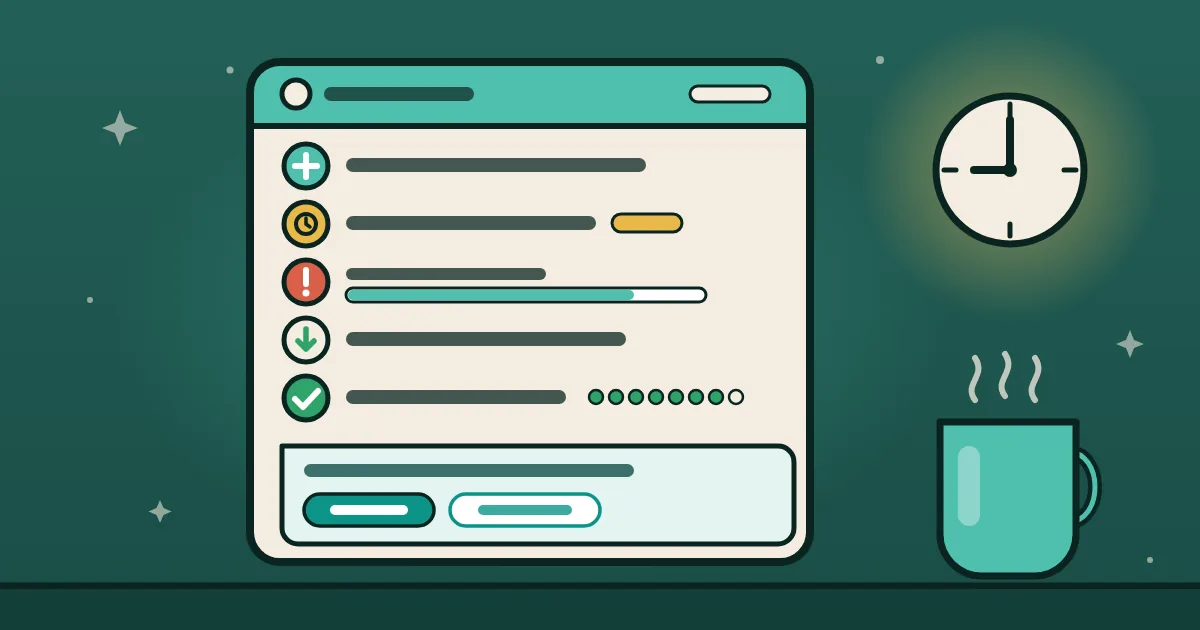
A summary is one short message that fits on one screen. You can read it in two minutes while the kettle boils. It holds only what needs your attention today.
Mila Manager is an AI employee in Telegram. During the day she handles client chats, tasks and suppliers. In the morning she sends the owner a summary by 9:00.
Here's a sample summary from Mila Manager's page:
9:00 summaryMila Manager
- 🆕 3 new clients wrote overnight
- 📞 One is waiting for a call before 12:00
- 📋 "Website" project — 80%, due Friday
- 🛒 A supplier sent prices: 12% cheaper
- ✅ Yesterday 7 of 8 tasks were closed
Call the client now or after lunch?
Six lines. It's a sample from the website, the data is made up. But it shows how a good summary is built.
Five lines and one question
1. Who wrote. New people overnight and yesterday evening. How many and who they are, without the text of every message. The details are in the client card if you want to open it.
2. Who is waiting for an answer. The most expensive line. A client waiting for a call before noon may go to someone else after noon. That's why this line has a time.
3. Which deadline is close. The project, how far along it is and when it's due. "80%, due Friday" — you can see at once whether you'll make it.
4. What came in from outside. Suppliers, partners, offers. Mila finds suppliers and compares their prices. You place the order — she only shows where it's cheaper.
5. What got done yesterday. "7 of 8 tasks". One number, and you can see the work is moving. The eighth task isn't lost either: every task has a deadline and a "closed" mark.
And one question. At the end — a decision that only you can make. One question with answer options. Tap a button and Mila carries on.
How Mila knows all this
The summary isn't made up in the morning. It's built from what Mila did all day.
- Chats. Mila talks to clients, keeps the tone and remembers promises.
- Client cards. She updates them herself: where the person came from, what they want, what they were promised and what the next step is.
- Tasks and reminders. Each one has a deadline and a mark that it's closed.
So the lines of the summary have a source. What Mila has checked comes with a link; what she doesn't know, she says so.
What's left for you
Mila takes the routine — you keep the decisions. The important things are yours to decide: she shows you drafts of emails in your name before they go out, and you place supplier orders yourself.
Mila works in the open: every task is visible in the report, and a summary of the day arrives in the evening.
How to try a morning summary tomorrow
You can start small, even without an assistant:
- In the evening, write down five lines: who wrote, who is waiting, which deadline is close, what came in, what got done.
- In the morning, read only those five lines — before you open your chats.
- Pick one decision for today and make it before 10:00.
After a week you'll see how much time used to go on "what did I miss". And if you don't want to collect those lines every evening, that's a job for Mila Manager.
The main thing
A manager's morning can take two minutes: one summary and one decision. The rest of the time goes to the work that moves the business forward.